Context Collapse: Barriers to Adoption for Generative AI in Workplace Settings
A new pre-print, co-authored by Mona Sloane, DTD Lab faculty co-lead, shows how the more-is-better approach to hoarding context data in AI systems falls short for those who use AI tools in their areas of expertise.
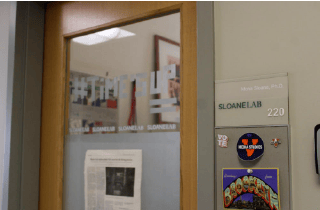
The Student Technology Council aims for student technology self-governance
Through her lab, Mona Sloane, has launched the Student Technology Council initiative — in collaboration with the Karsh Institute of Democracy and the DTD Lab — which is meant to act as a legislative body where students can elect other students to advocate for them about technology on Grounds.

Fundamental Rights in Brazil from a Women’s Perspective – Contemporary Reflections
Yasmin Curzi, DTD Lab postdoc, contributed a chapter to a new book analyzing fundamental rights from a female perspective focusing on gender equality, democracy, and contemporary legal challenges in Brazil.
A Better Burst
Mona Sloane, DTD Lab faculty co-lead, argues in a new co-authored pre-print, that today’s AI landscape looks a lot like past infrastructure booms—and that this moment is an opportunity to realign it with the public interest.
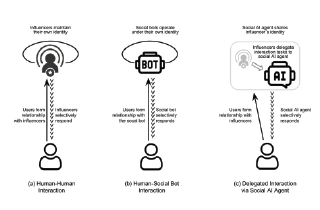
When Influencers Delegate Replies: How Social AI Agents Shape User Engagement
Steven Johnson, DTD Lab faculty co-lead, co-authored a new paper that he hopes will contribute to the emerging scholarship on the understanding of platform-enabled delegation of social relationship management to AI agents — which we refer to as Social AI Agents.

In the favelas, online gambling sells survival and delivers precarious living conditions
David Nemer, DTD Lab faculty co-lead, argues that betting functions as a parallel financial infrastructure, mediated by platforms, sign-up bonuses, influencers, and promises of quick profits, presenting itself as an opportunity which is where its power lies.

Cameras have quietly appeared in thousands of US cities – now, their integration with AI is sounding alarms
Jess Reia, DTD Lab faculty co-lead, writes about the risk that AI-based automated license plate readers pose to civil liberties in general, and to privacy and human rights specifically.
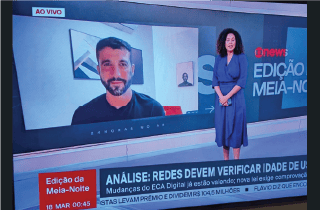
The conviction of Meta and Google in a case involving a young person in the US sets a precedent for new lawsuits, says anthropologist
David Nemer, DTD Lab faculty co-lead, discussed the new Digital Statute for Children and Adolescents (ECA Digital), a landmark piece of legislation that places Brazil back at the vanguard of global internet regulation. Instead of banning social media for children and teenagers, Brazil chose protection and safeguards.
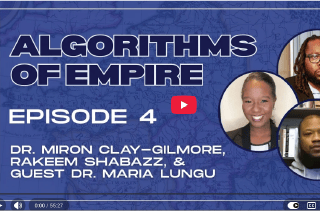
Algorithms of Empire
Maria Lungu, DTD Lab postdoc, discussed the ethical and social problems associated with AI-enabled predictive policing in the U.S., based on her article in The Conversation, during a recent episode of a podcast about the implications of AI across various fields.

Analysis: Hate speech increases violence against women
Yasmin Curzi, DTD Lab postdoc, analyzes how social media groups impact the daily lives of young people in a discussion of the trend "in case she says no".