
The Boundaries of Evidence-based Policymaking for Night-time Governance
Jess Reia, DTD Lab faculty co-lead, has a new paper out in which they examine the challenges posed by big data and AI-generated content to decision-making processes.

Understand the law signed by Lula that regulates the activity of digital influencers
Yasmin Curzi, DTD Lab postdoctoral research fellow, speaks about the new law's failure to provide mechanisms to contain the spread of misinformation.
What will Brazil do to stop Grok?
Yasmin Curzi, DTD Lab postdoctoral research fellow, spoke with Fast Company Brazil about the creation and circulation of sexual deepfakes and child abuse from Grok.

Companies profit from the digital sexualization of women and children
Yasmin Curzi, DTD Lab postdoctoral research fellow, wrote about the case of Grok, a tool developed by xAI, which made it possible to generate thousands of images with sexualization of women and children without any control.
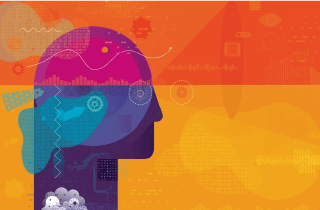
AI and the rise of intelligent sensing
Mona Sloane, DTD Lab faculty co-lead spoke with Nature Sensors about privacy and sensing and how AI could help with local data processing to address privacy much earlier in the pipeline.

UVA researchers examine AI’s impact on democracy
University of Virginia researchers examined how artificial intelligence is reshaping democracy during a discussion Friday, January 9, focusing on the technology’s influence on what people see, share and believe online.

Digital construction comes to the Pacific Northwest: Timber and the landscapes of automation
Megan Wiessner, DTD Lab postdoctoral research fellow, has contributed an article to an Institute of Electrical and Electronics Engineers (IEEE) special issue, "Automation by Design: Politics, Culture and Landscape in an Age of Machines That Learn".

AI Is Transforming Climate Science. Who Gets to Build It Matters, Says UVA Study
A UVA research team, including Mona Sloane, DTD Lab faculty co-lead, published a paper encouraging scientists, policymakers, and communities to rethink how AI processes for climate research are designed, governed, and shared.
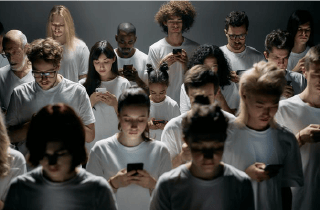
How emotions spread online following celebrity suicide news
Analyses of resharing behavior reveal distinct temporal patterns in the online propagation of different emotions following tragedies in a new publication co-authored by DTD Lab postdoctoral research fellow, Ehsan Nouri.
Online propagation of emotions: A study of resharing dynamics on social media following celebrity suicides
Ehsan Nouri, DTD Lab postdoctoral research fellow, co-authors a paper about emotional contagion on social media, particularly following shocking and tragic events, which often unfolds through widespread resharing, amplifying affective responses that are typically intense and negative.